
The conjunctiva is a thin, clear membrane that lines the inside of the eyelid and the white part of the eye (sclera). Conjunctivitis – or pink eye, as it is sometimes known – is a medical condition where the conjunctiva gets inflamed, usually due to a viral/bacterial infection, allergic reaction or being triggered by an irritant.

Illustration from All About Vision
Conjunctivitis, particularly bacterial conjunctivitis, is generally more common among children than among adults, with an overall decline in incidence as age increases.
Symptoms
Following are some of the symptoms that might be experienced in conjunctivitis:
- swelling of the conjunctiva in one or both eyes
- pink colour or redness in the sclera (white part) in the affected eye(s)
- irritation, itching and/or burning sensation in the affected eye(s)
- increased tearing in the affected eye(s)
- mucus (discharge) production that may form crusting on the eye lashes/lids, making it difficult to open the affected eye(s) in the morning
- gritty sensation in the affected eye(s)
- photophobia (increased sensitivity to light)
- temporary blurred vision
Intensity or nature of symptoms may vary depending on the cause of the condition, as discussed below with potential causes.
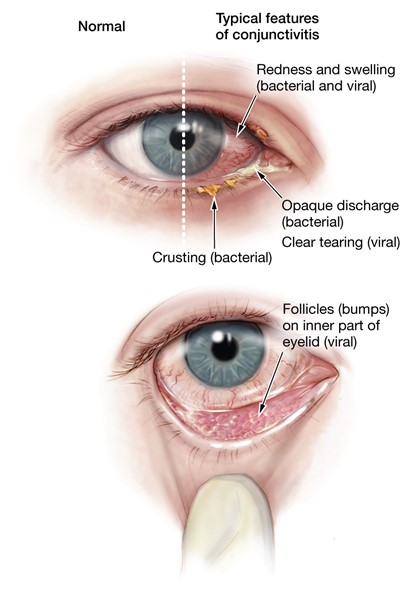
Illustration adapted from Precision Cataract Surgery
Complications
The rarer forms of conjunctivitis that are associated with sexually transmitted diseases (STDs) are generally considered to be more serious, potentially leading to loss of vision if remained untreated. Additionally, if a pregnant mother has bacterial conjunctivitis (particularly related to an STD) at the time of giving birth, it may be passed on to the baby (referred to as ophthalmia neonatorum). Such cases should be treated immediately as the baby’s vision is at risk.
Causes
There are four main factors that could cause conjunctivitis:
Viruses
- different types of viruses can cause conjunctivitis, adenoviruses being the most common type; less commonly, conjunctivitis may also be caused by the herpes simplex virus or varicella-zoster virus
- hence, symptoms associated with the common cold, flu and other respiratory infections may also be experienced concurrently
- eye discharge is more on the watery side
- often starts in one eye and spreads to the other within a few days
- potentially contagious
Bacteria
- different types of bacteria can cause conjunctivitis, the more common species being Staphylococcus aureus, Streptococcus pneumoniae, Haemophilus influenzae, Moraxella catarrhalis; less commonly, conjunctivitis may also be caused by bacteria that cause STDs, such as Chlamydia trachomatis and Neisseria gonorrhoeae
- incidence is more common among children than among adults
- may occur concurrently with an ear infection
- discharge is usually thick (pus), leading to eyelids getting stuck together
- potentially contagious
Allergens
- trigger factors include allergens such as pollen, mold, dust mites, pet dander, or even cosmetics and medication
- may occur concurrently with other allergic conditions such as asthma, hay fever, eczema
- itching, tearing and swelling may be more with allergic conjunctivitis
- not contagious
Irritants
- trigger factors may include dust, smoke, fumes, chemicals, foreign particles in the eye
- may be associated with improper use of lenses (e.g. worn wrong, or not cleaned properly)
- watery discharge and mucus may be produced
- not contagious
Diagnosis
Conjunctivitis can often be diagnosed quite straightforwardly by your GP or ophthalmologist, by examination of the eyes, and asking a few questions related to your symptoms and recent medical history.
In cases where symptoms are severe or a high-risk cause, such as a severe bacterial infection, STD or presence of a foreign body in the eye is suspected, a sample of discharge maybe taken from the eye to run a laboratory culture test. Treatment would follow accordingly.
Prevention
In the case of allergic conjunctivitis, incidence may be prevented by avoiding contact with or exposure to the allergen.
Practices that could help avoid the spread of infectious (viral or bacterial) conjunctivitis include:
- washing hands frequently with soap, and avoiding touching the eyes, nose and mouth
- cleaning eyes with sterile, disposable cotton swabs, and washing hands with soap after cleaning
- not sharing bed linen, towels and clothes
- not sharing cosmetics, particularly eye make-up
- discarding eye make-up used prior to infection
- using a fresh pillow case and face towel each day, while symptoms last
- staying home from school or work while symptoms last
In the case of newborns, an antibiotic ointment (usually erythromycin) is usually applied on the eyes in order to prevent eye infections that may occur as a result of exposure to bacteria that might be present in the mother’s birth canal. This in turn helps to lower the risk of ophthalmia neonatorum.
Treatment
In most cases, treatment for conjunctivitis involves alleviating symptoms. As such, a few general measures that might be recommended include:
- cleaning eyelashes and eyelids with a sterile cotton wool pad or soft towel dampened with boiled and cooled water
- using a cold or warm water compress to ease discomfort
- using aqueous ‘artificial tear’ drops to soothe and moisten the eyes for a few days
- not wearing contact lenses until symptoms have subsided completely, and replacing previous lenses (and possibly lens accessories) before recommencing use
- disinfecting spectacles (hard lenses) every night before using them again the following day
- replacing your pillowcase and face towel everyday while the infection lasts
- washing hands regularly with soap
Apart from this, your doctor might recommend specific treatment depending on the type of conjunctivitis contracted.
- Viral conjunctivitis
This usually clears up by itself, without any treatment, within 7-14 days or, in some cases, within 14-21 days. However, in more serious cases, such as those caused by the herpes complex or varicella-zoster viruses, antiviral eye drops or other medication may be prescribed to avoid potential complications.
- Bacterial conjunctivitis
This usually clears up within about 14 days, while symptoms might begin to subside within 2-5 days from onset. Antibiotic eye drops are generally recommended to help speed up the process. However, in more serious cases such as conjunctivitis related to STDs, pus discharge or incidence in immunocompromised individuals, oral antibiotics may also be prescribed in order to avoid potential complications.
- Allergic conjunctivitis
Once an allergen is identified, measures should be taken to remove it from the environment or to avoid exposure to or coming into contact with it. Antihistamine eye drops are often used to relieve symptoms, and in some cases antihistamine oral medication may also be recommended to speed up recovery.
Cover illustration adapted from iStock
 The Bio Log