
Fever, or pyrexia, refers to an increase in body temperature beyond its normal range. While our temperature may vary slightly during the course of the day (by not more than 1.0°C – 1.5 °C, usually higher in the evening than in the morning) and due to other factors such as exercise, menstrual cycle phase, hot weather, consumption of certain drugs and vaccination, the normal temperature range for a healthy individual is considered to be between 36.4°C – 37.2°C (97.5°F – 98.9°F). This temperature is regulated by the hypothalamus region of the brain which functions as a sort of natural ‘thermostat’.

Fever may be categorised on the basis of how far body temperature rises:
- low-grade fever – temperature rises to 38°C (100.4°F)
- moderate fever – temperature rises above 39°C – 40°F (102.2°F – 104°F)
- high-grade fever – temperature rises to 40°C (104°F) or above
- hyperpyrexia – temperature rises to 41.1°C (106°F) or above
Fever may also be characterised as the following types:
- intermittent – body temperature falls back to the normal level each day before increasing again (overall change is between 0.3°C – 1.4°C)
- remittent – body temperature falls back each day, but not to the normal level (overall change is between 0.3°C – 1.4°C)
- hectic – body temperature pattern is similar to either intermittent or remittent, but overall change is 1.4°C or more
- sustained – little to no change (0.3°C or less) in body temperature over a 24-hour period
- relapsing – like an extended version of intermittent fever where spikes in temperature are separated by days/weeks of normal temperature
Having a fever is not a condition in itself, but a symptom that arises as a result of the body’s immune reaction to some other underlying condition.
Symptoms
While fever itself is a symptom and is usually associated with shivering/chills and sweating, other associated symptoms may include:
- muscle aches
- headache
- burning/watery eyes
- weakness
- dehydration
- loss of appetite
- reduced and/or concentrated urine output, in some cases
- diarrhoea or constipation, in some cases
Complications
The normal body temperature is the optimal temperature for the proper functioning of our body organs. Therefore, very high fever that persists or is left untreated could pose a threat to the normal activity of organs, potentially leading to their malfunction and possible damage or failure. In fact, even moderate fever could be dangerous for individuals with heart or lung conditions as an increase in temperature causes an increase in heart rate and breathing rate. People with mental conditions such as dementia may also find that their condition worsens with fever.
Incidence of any of the following along with fever warrant for medical attention in order to avoid further complications or damage to organs:
- convulsions/seizures
- abdominal pain or tenderness
- neck stiffness
- breathing difficulty
- confusion/delirium
- severe and persistent headache
- nausea and/or vomiting
- fever rash
- loss of blood pressure from dehydration
- extreme drowsiness or lethargy
Causes
More often than not, an increase in body temperature is part of the body’s immune mechanism to counter an infection (usually microbial such as bacterial, viral, fungal). The identification of a foreign organism within the body triggers a series of reactions through an immune response, which includes an increase in the production of white blood cells (WBCs) that are responsible for tackling and destroying the foreign organisms. The ‘fever’ part of this response occurs in three phases:
- In the first phase, the detection of an infection causes the hypothalamus to release a hormone which causes blood vessels to constrict (become narrow – vasoconstriction) and blood flow to reduce. This subsequently reduces heat loss from the body. At the same time, muscular contraction occurs, resulting in shivering. Both of these processes cause an overall increase in body temperature, optimising conditions for the production of and fighting mechanism of WBCs, while also making conditions less favourable for the survival of microorganisms such as bacteria and viruses. This two-pronged effect eventually sequesters the infection within the body.
- In the second phase, the fever levels off so that the amount of heat produced equals the amount of heat dissipated from the body. This makes the shivering stop, while the temperature still remains at the higher level.
- In the third phase, as the immune reaction subsides, the hypothalamus stops releasing its hormone for vasoconstriction, resulting in the blood vessels now dilating (vasodilation) so that blood flow increases and heat is lost from the body. Sweating occurs and the body cools down again. While this phase should occur naturally, in some instances, the body might require the aid of medication for an infection to subside and this phase to be attained.
Diagnosis
Body temperature is read using a thermometer. While mercurial thermometers were the first to be invented and were used for centuries, their clinical use is now discouraged due to potential toxicity from exposure to mercury – particularly if the thermometer glass is broken.
Instead, there are three kinds of thermometers that are largely used at present in the clinical diagnosis of fever:
- simple digital thermometer – placed under the tongue (with the mouth shut tightly), in the rectal area or under the armpit
- tympanic thermometer – placed in the ear canal
- temporal artery thermometer – placed over the temporal artery at the side of the forehead
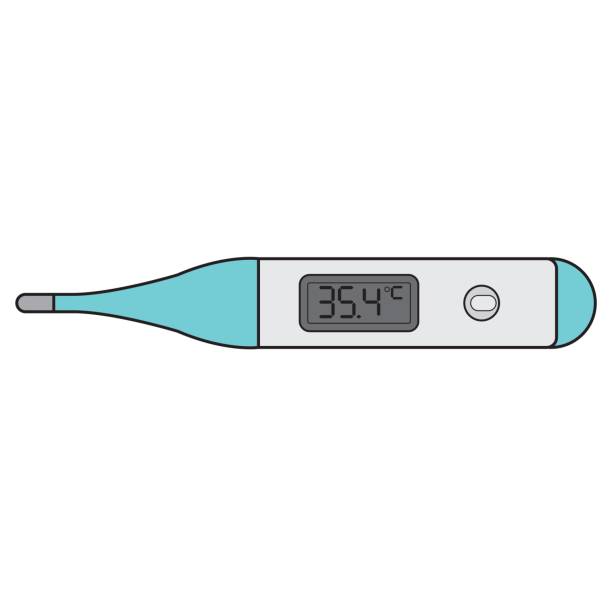
Illustration from iStock
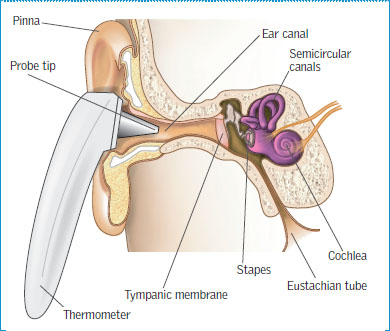
Illustation from estudioemeu.com.ar

Illustration from Quizlet
The COVID-19 pandemic saw a significant increase in the use of non-contact infrared thermometers as well. While these can be quite accurate – and very practical under circumstances such as an infectious outbreak, not holding the device at the correct distance from the forehead (ideally between 5cm – 8cm), having sweat on the forehead, or environmental factors such as direct sunlight or cold weather could affect the accuracy of the reading.
Prevention
Fever is a symptom of an underlying condition. Hence, the only way to avoid getting a fever is to avoid the causal factor to begin with – which, in the case of infection, would be to take precautionary measures to avoid infection.
In the case of fever that arises following vaccination, consumption / administration to children of an antipyretic such as paracetamol (acetaminophen, as it is known in the USA) immediately before or after vaccination could help to prevent or minimise an increase in body temperature. However, it should be noted that fever is a natural response of a healthy immune system.
Treatment
The symptom of fever can usually be treated with either paracetamol or ibuprofen, both of which are antipyretic and analgesic in function – in a medically recommended dosage based on the patient’s age and existing condition. However, it is essential that the underlying condition that is causing the fever is identified and treated accordingly, concurrently.
It is important to keep oneself hydrated with liquids such as water, fresh fruit juices, light soups and even rehydration salts, while running a fever. It is also best to maintain a nourishing diet of elements that are easy to digest, avoiding foods that are heavy in oil, sugar, spices and fibre.
Cover illustration from Verywell Family
 The Bio Log