
Measles is caused by a virus that enters the body via the respiratory system. It is a highly contagious disease which has the potential to cause serious complications. Fortunately, the introduction of the measles vaccine in 1963 and subsequent implementation of global vaccination drives has significantly reduced the incidence of measles and/or its complications over the decades. However, a drop in vaccination and partial vaccination in some countries or regions has led to an increase in measles cases in recent years. Babies and immunocompromised individuals are the demographics most commonly affected by measles.
Symptoms
Onset of symptoms usually occurs about 10-14 days after exposure to the measles virus. Initial symptoms are similar to those of a cold and may include:
- fever
- sneezing
- cough
- runny/blocked nose
- red, watery eyes
This is often followed by the appearance of white spots inside the mouth – on the inner cheeks and on the inner sides of the lips.
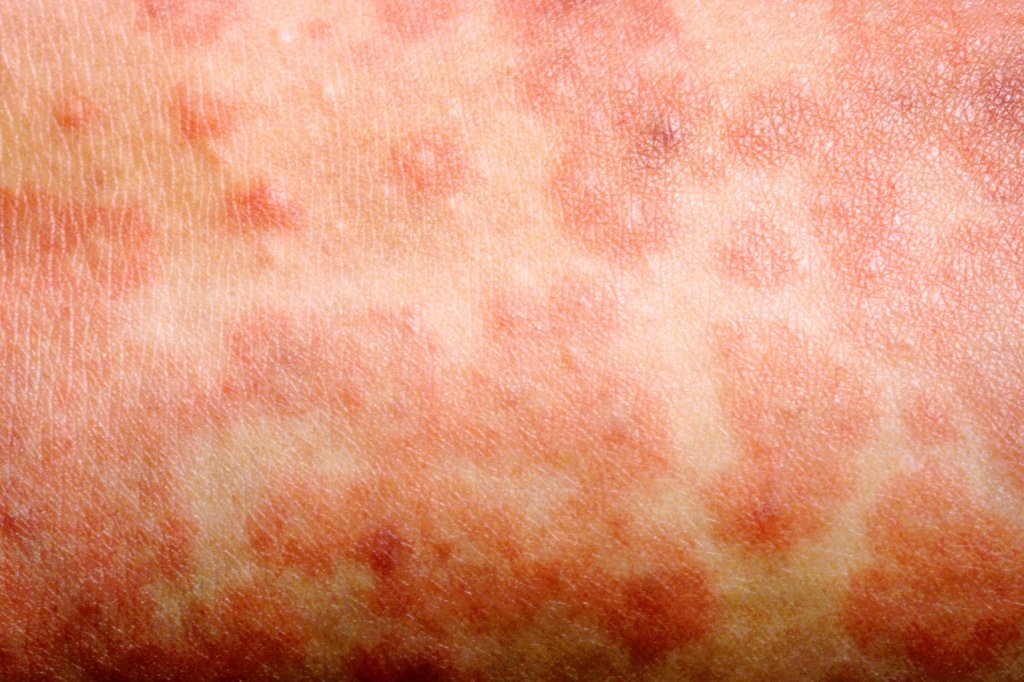
A few days later, a rash erupts, starting on the face and neck region and then spreading over the body over about three days. On average, onset of the rash occurs about 14 days after exposure. The measles rash may be more apparent on lighter coloured skin, appearing as red, blotchy patches that are sometimes slightly raised. The patches are not usually itchy and generally begin to subside about 3-4 days after eruption.

Complications
Complications related to measles are rare, but may arise if the virus spreads to other parts of the body such as the brain or lungs. As such, potential complications include:
- meningitis
- encephalitis
- subacute sclerosing panencephalitis (SSPE), which is very rare
- blindness
- pneumonia
- seizures
Measles in pregnancy can cause complications such as low birthweight, premature birth, miscarriage or still birth.
Causes
The measles virus, which is of the paramyxovirus family, is spread as an airborne virus and by direct contact with contaminated surfaces. Once inhaled or ingested, the virus infects the respiratory system before possibly spreading to other parts of the body.
Viral droplets that have been expelled into the air by an infected person through coughing, sneezing or breathing can remain infectious for up to two hours after the infected person has left the area. Being highly contagious, the virus can cause infection in upto 9 out of every 10 susceptible individuals that an infected person comes into contact with. Susceptible individuals include children, non-vaccinated or partially-vaccinated individuals and immunocompromised individuals.
Diagnosis
While observation of a measles rash may often be considered to be a diagnosis of measles, confirmation of diagnosis may involve obtaining a blood serum sample and/or throat or nasopharyngeal swab and running laboratory tests to determine the presence of measles-specific IgM antibodies. In some cases, urine samples may also be used as anti-measles antibodies can be detected in urine as well.
Prevention
Measles can be prevented by vaccination.
The Mumps, Measles and Rubella (MMR) vaccine has proven to be effective in the prevention of measles incidence, and in the past has been instrumental in eliminating measles from some countries including the Unites States. The World Health Organisation (WHO) estimates that around 56 million deaths have been prevented the world over between the years 2000-2021 as a result of vaccination drives carried out by governments and international organisations.
Complete vaccination involves the administration of two doses of the MMR vaccine. A single dose may often be insufficient to develop immunity from measles. The Centers for Disease Control and Prevention (CDC) recommends that the first dose of the vaccine be administered between the ages of 12-15 months, and the second dose be administered between the ages of 4-6 years. A minimum interval of three months between doses is recommended. Receiving both doses of the MMR vaccine is believed to provide 97% immunity against the measles virus.
MMR vaccination is a mandatory requirement when visiting or arriving from certain countries where measles is prevalent, as a measure to prevent the resurfacing or spread of measles between countries.
If a person is diagnosed with measles, it is recommended that they remain in isolation for at least four days following eruption of the measles rash in order to minimise the risk of spreading the infection to others.
Treatment
There is no specific treatment available for the treatment of measles infection. Hence, it is imperative to raise vaccination awareness and carry out vaccination drives, along with follow-ups on second dose administration around the world, and particularly in countries where the measles virus is prevalent.
A nutritious diet, adequate fluid intake and sufficient rest could help to ensure a smoother recovery and avoid the incidence of measles-related complications. Antibiotics may be prescribed for secondary infections that subsequently arise following infection with the measles virus. The WHO also recommends administering two doses of vitamin A supplements, 24 hours apart, for children diagnosed with measles in order to lower the risk of damage to the eyes or blindness, as well as other fatal complications that may arise.
Cover illustration from Gavi, the Vaccine Alliance
 The Bio Log